Showing posts with label book review. Show all posts

Tuesday, May 8, 2018

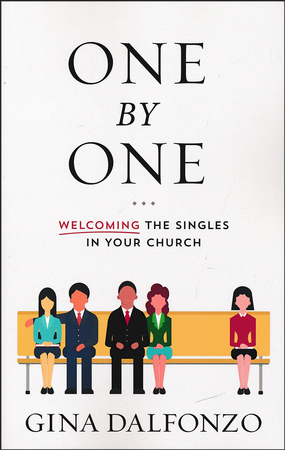
Book Review: One By One, Welcoming the Singles in Your Church

Image result for one by one Gina DalfonzoOverview 

 There are many books about living life as a single Christian, but none about singles in the church. That is until Gina Dalfonzo brings to light the unique plights of singles who feel left out in family oriented churches and what churches can do to welcome single people.  


What I Liked

 I love and am thankful for the topic of this book. Many people do not realize how hard it can often be for singles at church. Even at the most friendly, healthy, and gospel centered churches, we sit alone surrounded by couples with their arms around each other. We gladly serve in the nursery, but wonder if we'll ever have children of our own. We go out of our comfort zones and talk to people of all ages, backgrounds, relationships statuses, and walks of life, but we can't help longing for more people like us. We are a minority in the church. We are different. Dalfonzo address these things in "One by One", and you can almost hear the collective sigh of singles everywhere. 


What I Didn't Like

 In general, I found the tone of this book to be angry and bitter. Granted, there are some instances where her anger is justified. And I am not trying to take a "holier than thou" attitude. I have my own bitterness and anger issues when it comes to my prolonged singleness. But as I read this book I felt myself becoming more frustrated, bitter, and angry with my singleness. This could be an even bigger turn off for readers who may already have the bias that single people are always angry, bitter, and selfishly living their life- an attitude and assumption Dalfonzo is trying to correct.

 Dalfonzo calls out specific ideas, beliefs, and people in this book, and many of them rightly so. I was shocked at and hurt by certain views and attitudes on singleness that that church has. But there were two men she criticized, specifically Mohler and Piper, that I did not appreciate and thought was badly done. I freely admit my bias in favor of these two men. Piper is one of my favorite preachers and I have been blessed significantly by his writings, ministry, and podcasts. And if I ever went to seminary, I would only go to Southern where Mohler is currently president. But in spite of my bias, I think Dalfonzo has been unfair. There is one time where she criticizes Mohler and while I think he should have been more clear and should not have generalized singles, she misunderstands him. The second time she criticizes Mohler and Piper, is a statement where she calls them out but never shares what these men said that was so offensive to singles. 

 Dalfonzo also spends a lot of time criticizing books like "I Kissed Dating Goodbye" that give strict rules for courtship. I agree with Dalfonzo in that I don't think that is the only "biblical" way to date. But I think Dalfonzo goes too far. If that is the way an individual wants to date, who are we to say they can't?


Conclusion

 Overall, I thought this book would be alerting Christians to the singles in the church and some of the unique challenges we face and then giving them advice on how to love us. While "One By One" did technically do that, I thought a lot of the book was complaining, it lacked a good gospel and theological base, and the section showing people how to love singles was short in comparison. I don't think this book is bad, but it was disappointing and I would sadly not recommend it.  

Tuesday, February 6, 2018

Book Review: Who Has Your Heart? by Emily Ryan

Synopsis


 Who Has Your Heart? by Emily Ryan is a book written for single women on how to practically live a godly life, using the story of Jephtha's daughter in Judges 11. Jephtha vows to God that the first thing to come out of his house when he returns from war will be given to God as a burnt sacrifice. Sadly, the first to greet him is his daughter. Taking the point of view that Jephtha's daughter's sacrifice is figurative (instead of being physically killed as a sacrifice she remains a virgin her entire life) Emily Ryan uses this young woman's journey as an example for how single women should live their life.


What I Liked

I loved Emily Ryan's honesty. I loved how she describes
the story of Ruth in the Bible. "...Not to sound bitter, but I haven't even had one chance at love and marriage, and this lady gets two!" (29). Because frankly, though Ruth has a beautiful story that points us to Christ, our kinsman redeemer, I have often felt the same way. Also, I loved her honesty in the personal story she shared about her sister marrying before her.


 Finally, I loved her conversational writing style. I felt like she was an older sister talking to me, sharing her story, and trying to help me with mine. Not preachy, but loving. Not judging, but accepting.

What I Didn't Like


Emily Ryan says in her book that as a single woman, she was looking for a role modal in the Bible, but everyone was married except Jephtha's daughter, so this young woman became Emily Ryan's inspiration. But what about Jesus? Isn't Jesus our standard, our perfect example, and our Savior? Why did she pick Jephtha's daughter who is mentioned in only one chapter of Judges when she could have picked Jesus, the theme of the entire Bible? I understand the desire for a female Biblical role model, which might be the reason why Emily Ryan chose Jephtha's daughter, but Jesus made us and died for us. I think He is more than capable of understanding women and He is everything we need. Jesus also remained single for his entire life, making Him, in my mind, the perfect role modal for a single woman as well as the perfect model for anything else in my life I will face.


  Also, the book goes through Jephtha's daughter's story, each verse and aspect of her character taken as a principle of how single women should live their lives. I agree with the principles Emily Ryan is teaching and did learn from them, but it was a huge stretch relating it so closely to Jephtha's daughter's story. 

 For example, the Bible says in Judges 11:34, "Then Jephthah came to his home at Mizpah. And behold, his daughter came out to meet him with tambourines and dances" (ESV). Emily Ryan notes that "Jephtha's daughter knew her identity. She was a tambourine player. And because she knew who she was, she also knew what she was to do" (50). The takeaway for us here is that just as Jephtha's daughter was a tambourine player and therefore played the tambourine, we need to know who we are as women (single) and know what we are supposed to do instead of chasing after things that are not ours (marriage at least right now). A good lesson, but one that was lost on me because of the message taken from one verse in the Bible that may or may not have been its' purpose.


Conclusion

 In conclusion, Who Has Your Heart? was a good read and not a heretical book. I don't regret reading it and was encouraged to know that my thoughts are not that different from other single women. But I would not recommend this book to others. There are many other books about singleness available that have the good things Emily Ryan shared without taking Bible verses and stories out of context and are also more rich in theology and truth.

This post first appeared on my other blog, The Truth in Sea Glass on January 5, 2015.


Tuesday, June 20, 2017

Book Review: Passion and Purity by Elisabeth Elliot


Synopsis

 Elisabeth noticed Jim in college. She admired him from afar- his leadership, his strength of character, and most of all his passion for the Lord. And Jim liked Elisabeth. They hadn't known each other long when he told her how much he liked her. But there was a catch; he knew God was calling him to be a missionary in places and situations where he would need to be single. So they both continued their lives loving each other, but unsure if they could ever love each other as man and wife.

  In Passion and Purity, Elisabeth Elliot, through her own love story with her first husband, Jim, shows single men and women how to navigate their singleness. As her personal story unfolds, she weaves in her own biblical thoughts about romance and relationships, how to surrender all of our hopes and desires to God, and how to re-focus our hearts and thoughts on Jesus Christ, our ultimate and only love. 


What I Liked

Many books have been written about singleness, love, marriage, and relationships, but this one is my favorite, and I believe, may be the best. And this is why:

 1. From the beginning, Jim and Elisabeth Elliot put Jesus above themselves. It was always only ever about Jesus. They recognized that their feelings for each other were good and given by God, but also, that they could never be more important to each other than Jesus.

2. Elisabeth Elliot uses her own story and her own experiences. As I read, it felt like I was reading a suspenseful romance novel about two Christian people deeply in love with Christ and each other, but who did not know if they could ever marry. I learned without realizing I was learning, like I was learning with the young Elisabeth. Then occasionally, when Elisabeth came out of the story and into the present, it was more like listening to my grandmother share what God has taught her through all of her years on earth.  

 3. Elisabeth Elliot is always preaching, but never "preachy". She always shares the truth even if it is hard and does not avoid certain topics where people may struggle, but she always does so in love and at appropriate times. With the admonition is her own confessions of hardships, struggles, and areas that she herself failed.

4. When I read this book, I felt understood and loved as a single woman. Spoiler alert: Jim and Elisabeth Elliot do eventually get married. But as a single woman I never felt like it was another happy ending for everyone except me, because, even bigger spoiler alert, several years after they are married, Jim is killed. Elisabeth writes from the perspective of both joy and sorrow, singleness and marriage, loneliness and companionship, on the mission field and off the mission field. She truly understands both singleness and marriage, and I never felt she elevated one above the other or claimed one was easier than the other. 

 This is the second time I have read this book, and I learned so much each of those times. Except for the Bible, it is the non-fiction book I most recommend to both men and women.


Wednesday, March 15, 2017

Large and Small Deaths // Laying My Desire for Marriage on the Altar

 "He was leading her away from her hearts' desire altogether and gave no promise at all as to when he would bring her back."  
~ Hinds' Feet on High Places         


 Early last week I was pondering my singleness and this quote from the allegory by Hannah Hurrand (which I think every Christian should read- it was that good!). Not that I don't usually ponder my singleness, but last Monday and Tuesday it was particularly on my mind.  

Image result for hinds feet on high places In Hinds' Feet on High Places, the Shepherd leads Much Afraid on a long journey where he says he will make her feet like those of the hind and hart leaping among the mountains. It is a hard journey that Much Afraid takes, but the Shepherd helps her, gives her companions, and at the end, Much Afraid has been completely changed and finds the high places where her Shepherd lives better than she could have imagined, a beautiful picture of our lives as Christians on this earth and the hope we have in heaven. 

 But what struck me most in this story is how at almost every turn, every change, every hardship and every new path Much Afraid took, the Shepherd asked her to make an altar and lay down her fears and desires and give them to Him. 

 Throughout my life, I have had to lay down my singleness before God many times. I remember specifically doing this my junior year in college. At that point in time, it was clear that God was not going to let me get married right after my graduation like I wanted. I realized that I had been holding my desire to be married in a tight fist, clinging to it more tightly than Him, like God could only be good to me if He granted me that desire. At some point during my junior year the Lord broke me, pushing me literally to my knees before Him where I knew I must offer my desire to be married to Him. It has been one of the hardest things I have ever done, but what a sweet communion with my Lord it gave me.

 However, offering this desire is not just something I need to do every year or every few months. Just as Much Afraid had to continually make an altar, I need to continually give Jesus my hopes, desires, and fears- particularly my desire to be married. This must happen every day. Every morning I need to submit and surrender to His will. 

 Much Afraid laid on the altar big, hard things as well as small things. I've been realizing that my singleness is comprised of both of those things. Usually I see it as one big, hard thing, but it is also made up of many small, hard things. The difficulty of singleness is also seeing my friends and people I grew up with have boyfriends and get married. It is the realization that my younger sister may get married before me. It is the awkwardness of relationships with married friends changing. It is holding crushes and potential relationships with an open hand. It is being alone on Valentines' Day. It is no one asking me to dance. It is the realization that I may never have children. These are the little deaths that I forget I must also lay on the altar. 

 So right now, today, and yet again, I lay my desire to be married on the altar. I do not want to be single. I did not want to be single when I was six. This is hard. So hard. But I lay this desire at His feet for Him to take and do as He sees fit. And starting now, I will do this every day, because that is what my weak, selfish hearts needs.

 Lord, I pray that I will trust You with these large and small things. I pray that I will hold my hopes and desires with an open hand and that no matter what happens with my life I will say, 'You are good', because You are always good. 

Have you read "Hinds' Feet on High Places?" 
How did the book impact you? What large and 
small deaths are you having to give to God?


Friday, June 26, 2015

Book Review: "Who Has Your Heart?"


 Synopsis 

 Who Has Your Heart? was written for single women on how to practically live a godly life, using the story of Jephtha's daughter in Judges 11. Jephtha vows to God that the first thing to come out of his house when he returns from war will be given to God as a burnt sacrifice. Sadly, the first to greet him is his daughter. Taking the point of view that Jephtha's daughter's sacrifice is figurative (remaining a virgin her entire life) and she was not literally killed, Emily Ryan uses this young woman's journey as an example for how single women should live their life.

What I Liked


  I loved Emily Ryan's honesty. I loved how she describes the story of Ruth in the Bible. "...Not to sound bitter, but I haven't even had one chance at love and marriage, and this lady gets two!" (29). Because though Ruth has a beautiful story that points us to Christ, our kinsman redeemer, I have often felt the same way. Also, I loved her honesty in the personal story she shared about her sister marrying before her.

 Finally, I loved her conversational writing style. I felt like she was an older sister talking to me, sharing her story, and trying to help me with mine. Not preachy, but loving. Not judging, but accepting.


What I Didn't Like


 Emily Ryan says in her book that as a single woman, she was looking for a role model in the Bible, but everyone was married, except Jephtha's daughter, so she became Emily Ryan's inspiration. But my question is what about Jesus? Isn't Jesus our standard, our perfect example, and our Savior? Why did she pick Jephtha's daughter who is mentioned in only one chapter of Judges when she could have picked Jesus, the theme of the entire Bible? I understand the desire for a female Biblical role model, which is probably the reason why Emily Ryan chose Jephtha's daughter, but Jesus made us and died for us. I think He is more than capable of understanding women. Jesus also remained single for his entire life, making Him in my mind the perfect role model for a single woman and anything else in my life I will face.


  Also, the book goes through Jephtha's daughter's story, each verse and aspect of her character how single women should live their lives. I agree with the principles Emily Ryan is teaching and did learn from them, but felt that it was a huge stretch relating it so closely to Jephtha's daughter's story. For example, the Bible says in Judges 11:34, "Then Jephthah came to his home at Mizpah. And behold, his daughter came out to meet him with tambourines and dances" (ESV). Emily Ryan notes that "Jephtha's daughter knew her identity. She was a tambourine player. And because she knew who she was, she also knew what she was to do" (50). This is referring to the fact that as Jephtha's daughter was a tambourine player and therefore played the tambourine, we need to know who we are (single) and know what we are supposed to do instead of chasing after things that are not ours to do. It was a good lesson, but one that was lost on me because of the somewhat corny message taken from one verse in the Bible that may or may not have been its purpose.


Conclusion

 In conclusion, Who Has Your Heart? was a good read and not a bad or un-biblical book. I have no regrets reading it and was encouraged to know that my thoughts are not that different from other single girls. But I would recommend choosing another book about singleness if that is a topic you are searching for. There are many other books about singleness that I have found to be more worth my time that I hope to share with you in the future! 


P.S. This post was originally featured on my personal blog The Truth in Sea Glass if you would like to visit me there.

P.P.S. I am now on Pinterest, as well!